Welcome To:
VIEW CART
Anti-Aging News
Anti-aging. A concept that is rapidly gaining momentum in the world of beauty and cosmetics. Women are no longer sitting back and letting time make its mark. In fact, more and more dermatologists are recommending that you start young and take preventative measures, including using sunscreen daily and using a moisturizer twice a day.

Among some of the most effective ways to prevent the visible signs of aging are by using moisturizers that contain Retinol (Vitamin A). Dermatologists agree that Retinol is one of the most effective and time-proven ingredients for anti-aging. “It actually works to remodel skin on a cellular level.” (Dr. Cohen as quoted in the New York Times, 2006)

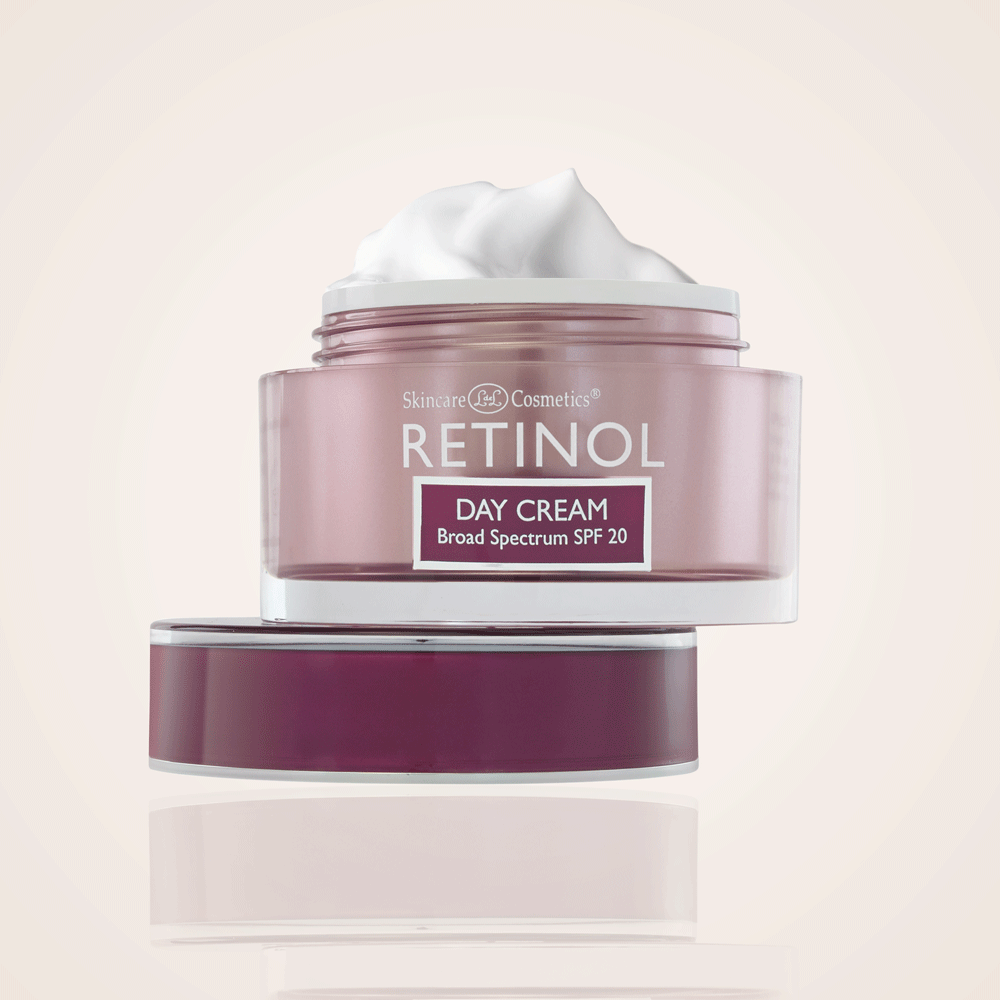
Retinol palmitate, which is used in the Skincare L de L Cosmetics line, helps to normalize skin while providing the additional benefits of cell renewal, boosting collagen and elastin as well as softening the appearance of fine lines and wrinkles, leaving your skin looking more radiant and youthful.

Read below to see what is being said about Retinol in the media.

According to a study conducted by the University of Michigan Health System, "Topical retinol improves fine wrinkles associated with natural aging." The researchers cite increased collagen production as being the most probable explanation for the reduction in the appearance of wrinkles and improved skin appearance. These results were seen within 4 weeks and researches cited continued improvement over the course of the 24 week study period.
Improvement of Naturally Aged Skin with Vitamin A (Retinol), Archives of Dermatology, May 2007
"Retinol, a vitamin A derivative, has been proven to stimulate cell turnover and increase collagen production. ‘As of today, this family of ingredients still has the most well-documented science behind it,’ says David E. Bank, an associate in clinical dermatology at Columbia University/Presbyterian Hospital in New York City."
Allure, April 2007
"Rely on Retinol…Derms swear by retinol, a vitamin A derivative, for its line-minimizing capabilities."
Self, August 2008
"Add Retinol. Talk about a power player: This vitamin A derivative has been proven to smooth the skin, unclog pores, and reduce wrinkles. To get all the benefits, apply it every night to freshly washed – but completely dry – skin."
Allure, September 2008
"If so many doctors and beauty companies are on a hunt for the next big anti-aging product, why does retinol still have so much appeal? The answer, many dermatologists say is simple: They work...there’s proof that they work."
The New York Times, November 30, 2006
"Don’t wait for the first crow’s feet to appear before you reach for that little tube. ‘Even women in their twenties should be using a topical retinoid-unless they’re pregnant or nursing,’ says Francesca Fusco, M.D., assistant clinical professor of dermatology at Mount Sinai School of Medicine in New York City. Here’s why: Retinoids, which contain vitamin A, are one of the most potent agents for preventing and reversing sun damage and signs of aging. And, says Hirsch, ‘they’re the ultimate multi-tasker. They speed skin renewal by shedding dull, pore-clogging cells and increase collagen production to prevent wrinkles.’"
Women’s Heath, September 2008
"...an over-the-counter product containing retinol…[will] diminish fine lines and increase cell turnover. With few exceptions, everyone over 30 should be on some form of retinol if they want to look younger."
Prevention, April 2007
"[Dr. Madfes] is also a proponent of night creams that combine retinol, a form of vitamin A that may help speed up the turnover of skin cells, and antioxidants such as vitamin C, vitamin E or lycopene that may help thwart environmental damage to the skin."
The New York Times, January 4, 2007
Retinol is a cosmeceutical superstar proven to deliver many benefits from smoothing lines and wrinkles to restoring the radiant glow of your youth.
Age-Less, by Dr. Frederic Brandt
"No other known chemicals or drugs can duplicate the diversity of anatomic and physiologic effects brought about by retinoids. Structurally, these substances resemble the parent compound vitamin A (retinol), and they have similarly pharmacologic effects."
Postgraduate Medicine Online, Albert M. Kligman, MD, PhD., August, 1997
Home | Contact Us | Customer Service | Privacy Policy | Site Map | Distributor Login | Top
Powered By Scriptable Solutions, LLC